Currency Products — DCC & MCP
When a customer travels abroad or shops online from a foreign website, one small but important question often comes up: In which currency should I pay? Behind that choice are two products designed to make international payments easier — or at least appear that way. These are Dynamic Currency Conversion (DCC) and Multi-Currency Pricing (MCP). Both aim to provide clarity and convenience for customers paying in a currency that isn't their own, but they work in very different ways and come with their own pros and cons.
Dynamic Currency Conversion
If you've ever been abroad, tapped your card, or checked out online and seen an option to pay in your home currency instead of the local one, you've encountered Dynamic Currency Conversion (DCC). It's most common at physical terminals, but also appears in e-commerce checkouts, especially on international websites that detect your card's origin and offer to bill you in your domestic currency. Here's what happens in the background: when the terminal or gateway detects that your card was issued in another country, it automatically looks up the home currency linked to it (for example, a Swiss card detected in a Paris store or an EU website). It then offers you a choice — pay in your card currency (Swiss Francs) or in the merchant's currency (Euro).
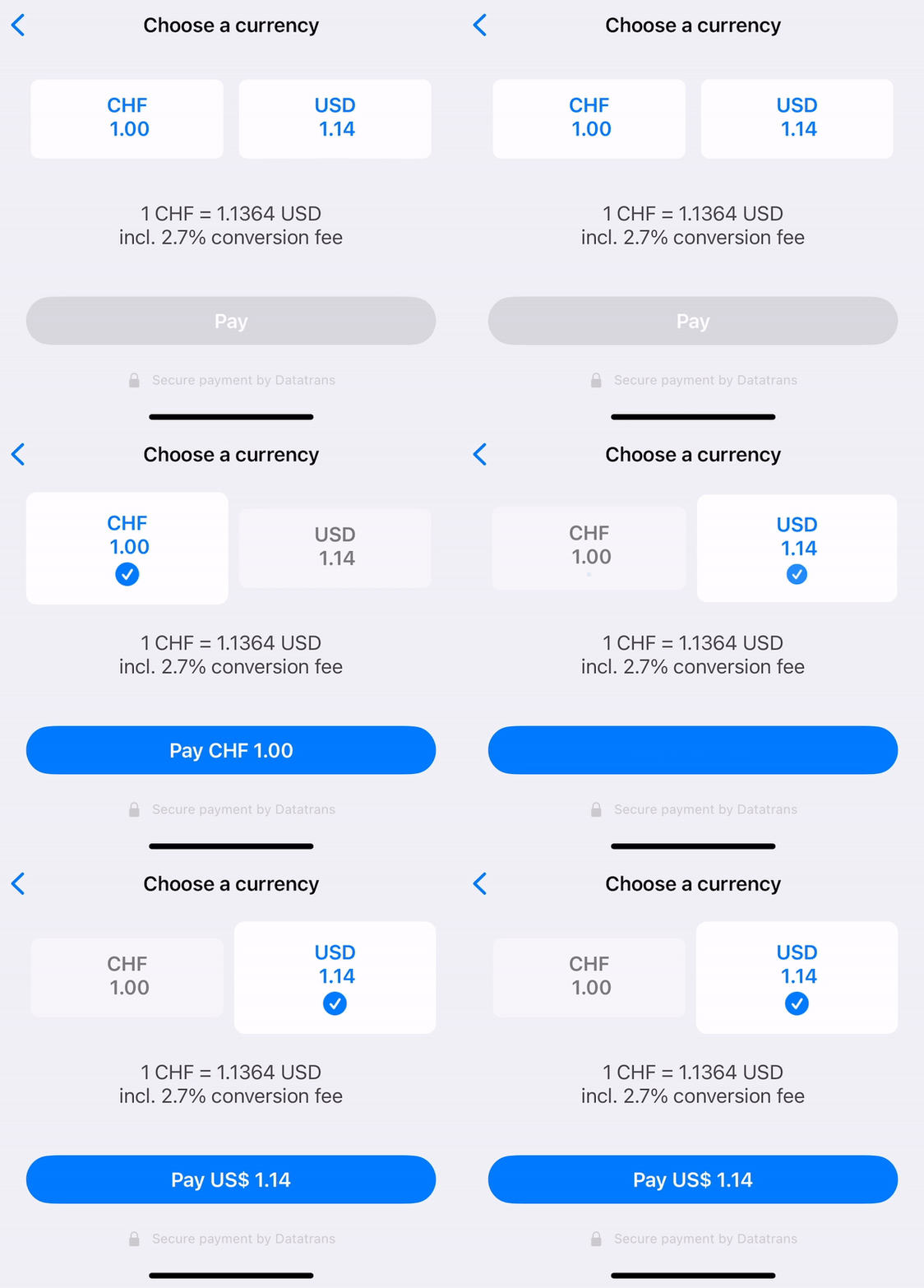
If you pick your home currency, the conversion is performed immediately at the point of sale or directly by the payment gateway. The DCC provider determines the exchange rate and adds a margin. For the merchant and acquirer, DCC can generate additional revenue, as they share that conversion margin. For the customer, it offers transparency: you see the exact amount in your home currency before approving the payment.
However, that convenience comes at a cost. The exchange rate is usually less favorable than what your card issuer would apply, meaning you often pay more than if you'd chosen the local currency. In short, DCC provides instant clarity for the shopper and extra income for the merchant — but not necessarily the best deal for the consumer.
Multi-Currency Pricing
Multi-Currency Pricing (MCP) works differently. Instead of converting the amount at the point of sale, the merchant's system itself offers prices in multiple currencies from the start. You'll often see this in e-commerce: a website that lets you switch between USD, EUR, CHF, or GBP before you check out. The merchant sets or calculates prices in each of these currencies, so when you choose your preferred one, the transaction is processed directly in that currency — not converted later.
This approach is especially popular with global online retailers and travel platforms, where clarity of pricing can make or break a sale. Customers feel in control because they understand exactly how much they're paying, without guessing the exchange rate.
From a technical standpoint, MCP can be implemented in two main ways:
- Static pricing: The merchant manually defines prices per currency, often rounding for consistency (e.g., "99.90" in every currency).
- Dynamic pricing: Prices are calculated automatically using live foreign exchange (FX) feeds, updated daily or in real time to reflect market rates.
While DCC happens after the customer decides to pay, MCP happens before they even reach the checkout. The advantage is confidence — especially for cross-border shoppers who might otherwise abandon a purchase because of unclear or unfamiliar currency displays.
Why it Matters
Both DCC and MCP highlight a broader trend in payments: giving customers choice and transparency. For merchants, offering the right currency options can improve conversion and trust, especially in international commerce. For acquirers and PSPs, these services can provide both added value and an additional revenue stream.
However, transparency is critical. The major card schemes (Visa, Mastercard, etc.) have strict rules on how conversion details must be displayed — from on-screen messaging to printed receipts. Customers must see the rate applied, the margin, and the final amount in both currencies. It's up to integrators and payment service providers to make sure those requirements are implemented properly, so the choice is genuine and informed rather than manipulative.
At the technical layer, correct implementation matters enormously. For merchants, enabling DCC might be as simple as switching it on in their gateway or acquirer configuration, since the conversion is handled entirely by the provider. MCP, on the other hand, often requires deeper integration work: currency management in product catalogs, pricing APIs, and checkout logic all need to support multiple currencies correctly. When done right, these tools make international commerce feel local. When done poorly, they confuse customers and erode trust — the exact opposite of what payments are supposed to achieve.
